
Supporting the global Bible translation community
Our Processes
We are committed to producing the highest quality Bible translations, rendering the meaning of the biblical source texts in a way that is accurate, clear, natural, and appropriate for the intended audience.
Partnership and Collaboration
Academic Standards
Our source texts are usually the standard scholarly editions of the Hebrew and Aramaic Old Testament and the Greek New Testament, though on request we may sometimes use the Greek Old Testament as source text. We do not do secondary translation (from an existing translation in English, for example) or adaptations, as we believe that these approaches do not result in the high quality that the churches require.
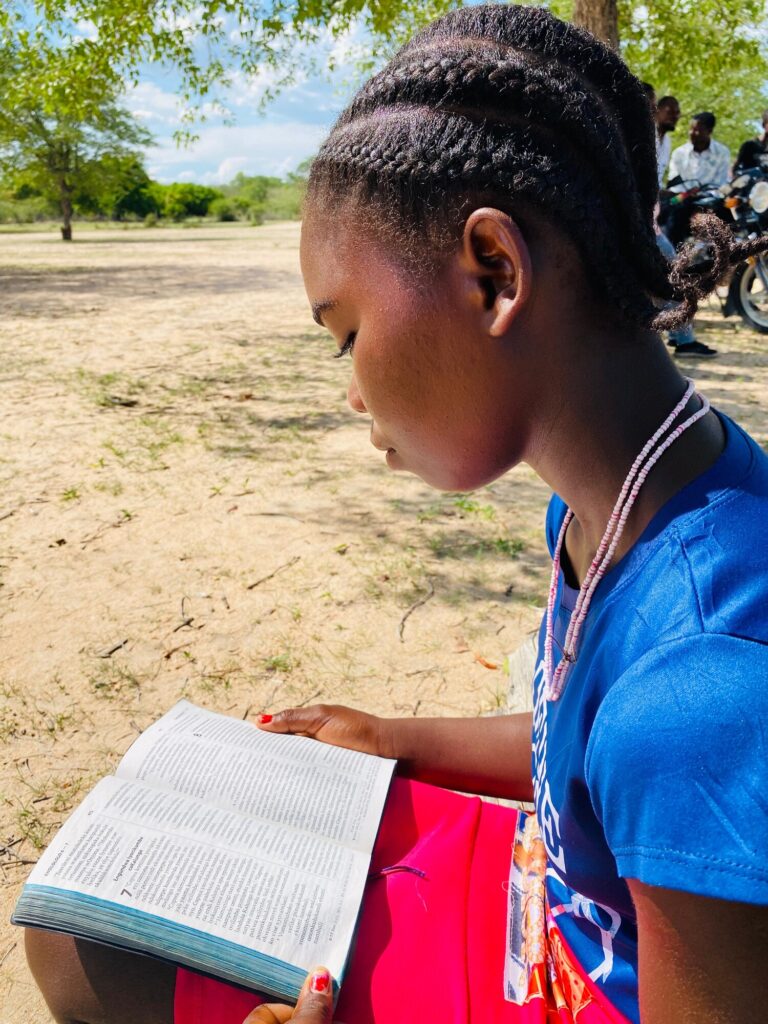
Meaning-based translation
Our translation approach is usually to do meaning-based translations into common language, though we may also do word-for-word translations such as interlinear editions, highly contextualised translations such as those for young people or people of other faiths, and high-register translations such as those for use in liturgy.
Types of Translation Projects
We are committed to producing first translations for communities that have never had the Bible in their language, though we also do revisions and new translations where an existing translation is no longer suitable. Increasingly, we also do study editions, with extensive background notes, images, timelines and maps.
The Translation Team
Most commonly, a translation team may consist of three translators, all native speakers of the target language with a first degree and at least one of them with advanced knowledge of biblical source languages and exegesis. We train them in basic Bible translation principles. Using key resources such as the UBS Translator’s Handbooks and Flora, Fauna and Realia Handbooks, as well as the range of tools available in the Paratext computer program, they translate in four stages shown below.
Drafting
A draft is made by one translator
Checking
A team-check is done by the other translators, usually entering comments into the text on their computers, after which the original drafter incorporates corrections and improvements
Review and Testing
A review or testing process invites input from the translation committee and wider community, sometimes in the form of trial editions
Consultations
Consultations are held regularly with a fully-qualified, PhD-holding translation consultant, who verifies that the translation is in line with UBS quality standards.
Most Bible translation into spoken languages is still done in written form. However, continuing our history of innovation in Bible translation theory and practice, we are also experimenting with other approaches, including Oral Bible Translation and the use of AI. And our technologies for the special field of Sign Language Translation are very advanced.